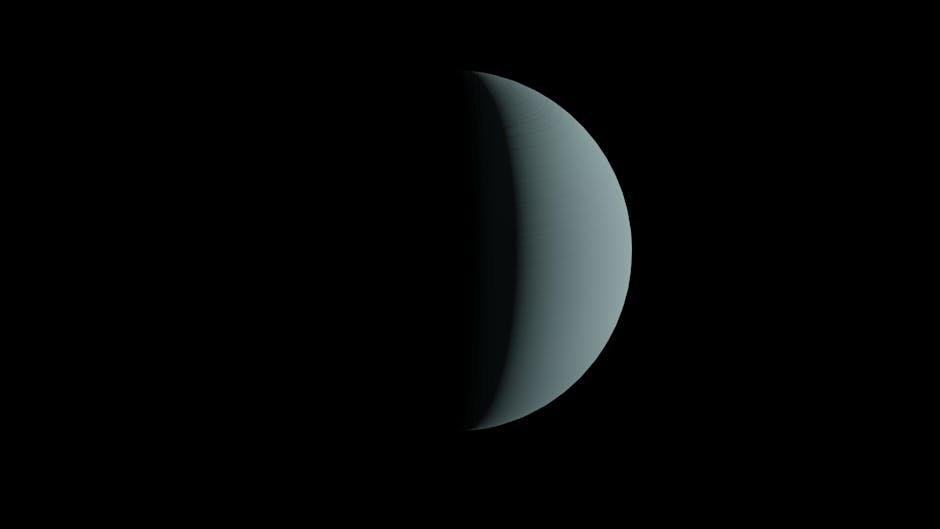
Boson Stars: Hidden Cold Objects Out There!
You ever think: what if space has stuff we can’t even imagine? So weird. Forget those regular stars you learned about. Red giants? White dwarfs? Nah. We’re on about boson stars. Just theoretical. But maybe chilling in the galaxy’s darkest spots right now. Changing universe secrets without a sound.
Not fiery gas balls. Nope. Boson stars? Totally different. Playing by rules scientists only guess at. Never actually seen. Big questions about what’s out there. And what everything is made of.
Nobody’s Seen a Boson Star. Just Ideas
Okay, let’s be real. Nobody’s seen a boson star yet. Like, not with their own eyes. You can’t just point a big telescope from Pasadena and go, “There it is!” Their existence? Pure theory. All from crazy computer models and wild math. Scientists have theories. Definitely. But hard, solid proof? Still waiting. Could see one tomorrow. Or maybe never. Wild thought.
Boson Stars? Made of Bosons. Dark Matter Stuff
So, how do these things work, or, well, not work? Regular stars burn hydrogen and helium. These boson stars? Bosons. That’s it. And another thing: all the stuff we can actually see in the universe – the atoms, the light, all that – barely scratches 4.6%. It’s tiny. What’s the rest? Dark matter. And dark energy. We call ’em “dark” ’cause we can’t find ’em directly. And physicists? They’ve got a guess. If our small bit of the universe has tons of varied particles (quarks, fermions, whatever), then that massive 95% of dark matter and energy probably isn’t just one boring particle. Right? So then comes bosons. These particles? Totally hypothetical. But they could be a big part of dark matter. And they might clump together. Forming these crazy, super-packed objects.
Super Cold. No Light. Invisible
Forget bright, hot stars. These boson stars are like giant space ice cubes. Seriously cold. Their surfaces could hit -270 to -272 degrees Celsius. That’s practically absolute zero. So cold, nothing moves. And because they’re so ridiculously cold? They give off almost no light. Or energy. Just invisible from out here. A cosmic ghost. Chilling in space, quietly cold.
How They Form: Bose-Einstein Condensation. Crazy Process
So, these space ice cubes? How do they even happen? Not nuclear fusion like ol’ Sol. Nope. It’s called Bose-Einstein condensation. Imagine: bosons. Tiny, low-energy particles. They crowd together. Get shoved close. Lose more energy. Cool down fast. And if atoms get that cold, near absolute zero? Their energy evens out. They “tangle up,” acting like one giant super-atom.
Because for boson stars, scientists guess this: huge piles of dark matter bosons, maybe from way back at the Big Bang, just packed together for millions, even billions of years. Gravity pulled them in. But they didn’t get hot and light up, like hydrogen. Nah. They got colder. Condensed. Became these giant objects. Planet-sized. Or like Jupiter. Or even our Sun. All moving as one quantum thing. Seriously wild.
Boson Stars Might Explain Weird Stuff Out There
Astrophysicists? They pick up weird signals all the time. Deep space. Odd energy bursts. Gravitational ripples. Or light that jumps around. And from nothing. Zip. Nada. Pretty much ghost signals. But maybe boson stars are involved? If these dark, strange particles clump into big objects, we might feel their effect across space. Even if seeing them is impossible.
And Boson Stars Could Bash Into Other Stuff. Making Waves
It’s not only about odd energy bursts. Also, researchers think boson stars could clang into other super-dense things. Neutron stars, maybe? And when that happens? They don’t just disappear. Boom! Powerful gravitational waves. Ripples in spacetime. Big detectors on Earth might catch them. These aren’t just guesses, either. Real, dark gravitational wave signals? Yeah, we’ve found ’em. From places that look totally empty. So, boson stars making cosmic echoes? Maybe.
We Need Better Tech. Like the Large Hadron Collider Upgrade
So, how do we find proof? For these invisible, super-cold, theoretical stars? We gotta wait. Keep pushing science forward. Our ideas about dark matter and dark energy are always getting bigger. New ways to look. Better tech. Coming soon. The Large Hadron Collider? It’s getting an upgrade. A detector eight times better. That precision could be the big break. Help us find dark matter secrets. And, hey, maybe prove boson stars are actually real. Until then? The hunt is on.
Quick Questions!
Q: Black holes same as boson stars?
A: Nah. Not exactly. Both are super-dense. Got strong gravity. But boson stars? Actual matter (bosons!), just weird matter. No event horizon like a black hole has. And they form by things packing together, not regular stars collapsing into infinity.
Q: Why no light from boson stars?
A: Because they’re freezing. Near absolute zero cold (-270 to -272 C). Regular stars make light and heat with nuclear fusion. Boson stars? No internal nuclear reactions. Just low-energy bosons. So. Dark.
Q: What’s Bose-Einstein condensation? How’s it link to boson stars?
A: It’s when particles (like atoms, or these bosons) get super cold. Then packed tight. They basically merge. Behave as one thing. Scientists think this is key. How big clumps of bosons get cold. Pack down. Make a super-dense boson star.