Microsoft’s Majorana 1 Chip: Huge Leap or Just a Pipe Dream?
So, the future of computing? Just smoke and mirrors, or are we close to something massive? Seriously, forget the AI hype stuff for a minute. We’re talking quantum computers. Machines so powerful they’d make today’s supercomputers look like dusty old rotary phones. And right smack in the middle of this crazy science race? Microsoft. With their big talk about the Majorana 1 chip. But did they actually change the whole game, or are they just selling us a far-off fantasy?
The Wild Power of Quantum Computing
AI’s getting all the headlines, right? Sure. New AI breakthrough every single day, it feels like. But under all that noise, quantum computing? It’s quietly building up something totally game-changing. Lots of smart people think quantum tech is even more important. Because if these things really get into our everyday lives, they’re gonna play a huge part in how AI grows up.
The potential? It’s just bonkers. Seriously. Picture this: one quantum computer. It outdoes every single regular computer on Earth today. That’s the promise. If they ever get these machines working full-tilt, they could totally make all our current standard computers old news. And this is why science folks and huge tech companies are just throwing money at building a quantum computer that actually works.
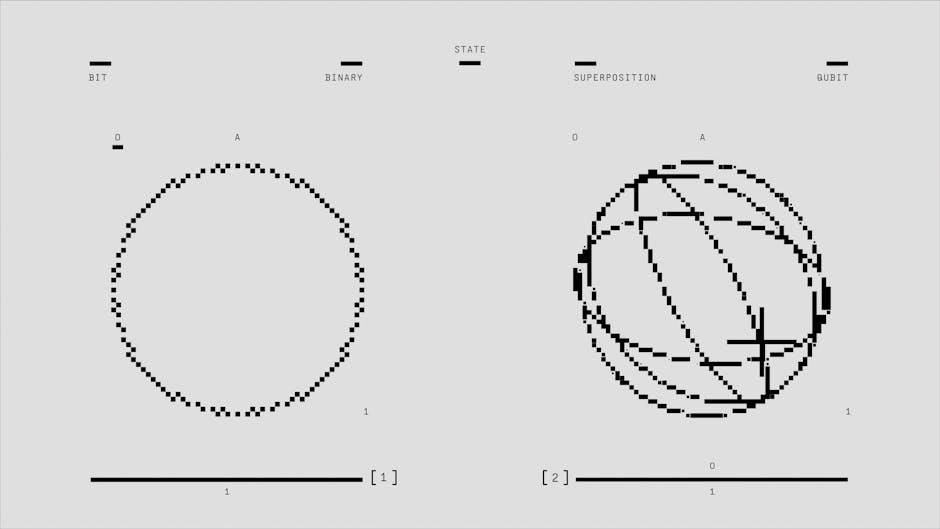
Okay, normal computers? Bits. Basic little pieces that are either 0 or 1. Quantum computers? They use qubits. And thanks to quantum mechanics – that wild science stuff – these qubits can be both 0 and 1 at the same time. Through this weird thing called superposition. Researchers are using this exact property to build machines. Millions of times more powerful than anything we have now. This isn’t just a bump up. It’s a whole new way to crunch numbers.
The Qubit Problem: Fickle, Flawed, and a Messy Vibe
Even with all that crazy potential, quantum computers hit a really tough snag. Qubits, man. Not like regular bits. They’re super sensitive contraptions. Really easy for outside stuff to mess with them. Then they get unstable. Errors happen.
Protecting these fragile qubits from just everything outside? Huge engineering headache. Just keeping them alone is a hard job. Also, current qubits? They screw up way more often than traditional computer bits. Fixing these errors needs tons of computer muscle. And that, itself, turns into another problem.
Because of these hiccups, quantum computers aren’t practical for daily use yet. Not even close to today’s regular machines. But still, their potential is just so shiny. Billions of dollars get poured in every year. All pushing developers towards that hard-to-reach goal.
Majorana 1’s Radical Fix: Fermions & Superconductors
Microsoft’s been messing around in the quantum realm for ages. Just quietly working on their own thing. For 17 years, they just plugged away quietly. Then, boom, they dropped the bomb: announced their Majorana 1 chip. Instantly, headlines everywhere.
Microsoft went a totally different route. Seriously. Practically reinvented the wheel to hit quantum computing’s main problems. Their Majorana 1 chip flips a lot of how traditional quantum computers are put together. Aimed at solving issues in a wild new way. This ain’t a ready-to-sell product just yet; it’s more of a gutsy concept. A really big idea.
Regular quantum setups? They mostly use particles like electrons or protons for qubits. And these? They just naturally react to outside stuff. To keep ’em safe, engineers build super isolated spots. With magnetic fields and freezing ’em almost to absolute zero. Still, these particles get messed with. That causes errors. And demands more resources for fixing them. Microsoft’s solution? Totally different game.
Majorana Fermions: A Game Changer for Stability?
So instead of electrons or protons, Microsoft picked a different particle: the Majorana fermion. Some Italian brainiac, Ettore Majorana, first cooked up the idea in 1937. Said these particles were their own antiparticles. The cool thing? They’re super resistant. Don’t care about outside fuss. They’re basically self-protective, shielded from all that external ruckus.
For decades, Majorana fermions were just theories. People claimed they found ’em. But then pulled it back. Now? Microsoft says they’ve actually proven these particles exist. Big deal. They believe these special fermions can be thrown into quantum computers. Straight up fixing the annoying instability issues of qubits. Unlike electrons, Majorana fermions are self-protective. Way easier to insulate.
This discovery alone could be huge. But like all new tech, here’s the catch: these particles don’t just hang out anywhere you want. Controlling their movement needs another clever fix.
Topological Superconductors: The Control Material
So to use these Majorana fermions, Microsoft cooked up a new kind of matter: a topological conductor. Weird stuff. It has properties of both a conductor and a semiconductor. They pulled it off by mashing up iridium arsenide, which is a semiconductor, with aluminum, a conductor. All in one layer.
This odd hybrid material can switch modes. Semiconductive one minute, superconductive the next. As needed. Microsoft engineers say this topological conductor will let them pinpoint control the Majorana fermions. How they move and interact. The whole idea? Simple, but wild: take a self-protecting particle, then put it in a super-controllable spot.
If this new material and the Majorana fermions actually work like they’re dreaming, Microsoft thinks it could lead to a pretty much perfect quantum computer. This new setup could just ditch all the usual problems. Keep qubits from falling apart from outside stuff. Big deal is: qubit errors, which usually get fixed with software, would be solved right there in the hardware. Current quantum computers? They spend most of their energy just correcting errors. Hardware-level error correction. That could finally let loose their real power, like they said it would.
The Quantum Race: Microsoft vs. Google, China, and the World
Look, right now, the Majorana 1 chip isn’t some working, mass-made thing. It’s just a concept. So, is Microsoft trying to pull a fast one? Nah. Not really. Their big goal is to stir up major buzz and get everyone looking.
Just like Google, doing its thing with the Willow quantum chip, and other huge players, like in China, Microsoft is trying to pull in serious cash and smart people for their quantum projects. This is a really high-stakes race. Getting the best money and smartest brains? That’s what matters here. The race isn’t only about building the first quantum computer that actually works. It’s about being the first to market.
The company that gets this tech working and selling first? They’ll probably call the shots for global quantum computing standards. History repeating itself. Like when Intel’s x86 architecture became the main standard for PCs back in the 80s and 90s. Beating a bunch of other designs. If Microsoft can grab the cash they need to develop this thing, they could totally come out on top in this huge competition.
The Gnarly Hurdles to a Practical Quantum Future
So the Majorana 1 chip? Looks fantastic on paper, right? In theory, hitting over a million qubits within a decade. But, listen, there are some seriously gnarly hurdles still to clear. Yeah, Microsoft claims they’ve proven Majorana particles exist. But their exact deal with them is still unknown. How does their environment mess with ’em? How do you even make them best? And how can you reliably control them? These basic questions need tons of research.
Then there’s that topological conductor itself, too. Microsoft says it’s possible in theory to create it. But how will they even mass-produce it? Going from lab theory to actually making it? That needs insane amounts of smart people, time, and cash. Absolutely no guarantees any of this will work as flawlessly in practice as it does in theory. Not a single one.
The next ten years? Huge. Experts guestimate quantum computers could become useful by the 2030s. Eventually swap out current supercomputers. But whose tech will be the boss of this future? Microsoft? Google? Or maybe some out-of-nowhere dark horse? The finish line is still way out of sight. And the competition is absolutely fierce.
Frequently Asked Questions
Q: Is Microsoft’s Majorana 1 chip something I can buy right now?
A: Nope. The Majorana 1 chip is just a concept for now. A wild idea. Not something you can actually buy or they’re ready to make a ton of. Microsoft just wants to get cash and eyeballs on their quantum computing stuff with this announcement.
Q: So, what’s special about Majorana fermions compared to the old particles for qubits?
A: Majorana fermions are, in theory, like their own antiparticles. And they’re thought to be super tough against outside interference. This self-stability might mean way fewer errors. Which is a big deal when you compare them to the electrons or protons usually found in regular qubit setups.
Q: What’s a topological superconductor, and why does the Majorana 1 chip even care?
A: It’s this new kind of material Microsoft found/made. It can act like both a conductor and a semiconductor. And this special trait? Super important for the Majorana 1 chip. Because it gives them the right place to totally control and tweak those Majorana fermions. Which, by the way, don’t just chill out or play nice anywhere.