DIY Surfboard Fin Box Repair: Fast Fixes for Your Board
Snap! You hear that? At the local spot? A blown fin box is a total buzzkill. Your favorite stick? Sideline city. Faster than a rogue set on a busy Saturday. But don’t toss that board just yet! Seriously, a good surfboard fin box repair is totally doable. Even for us average shredders. Getting back in the water. Feeling stoked. That’s the real vibe. So, lemme show ya how to wrangle that fin box and get your deck on point.
Is it Fixable? Check the Damage
Alright, so first up: What’s the deal with your fin box? Like, really look at it. Futures fin boxes often get a bit wobbly toward the back. Or dinged on the front right. Classic.
Shove a fin in there. Does it sit right? Around 7 degrees, usually? If it’s not totally crooked, good news. You’re set to work with what’s there. Big, deep structural cracks? Maybe for the pros. But minor jiggles? Yeah, we can totally handle that.
Get Ready: Sanding and Taping is Key
Okay, this part? Super important. Grab an 8-inch hard pad, 60-grit. You’re grinding down. High spots, weak points. The old hot coat. Right back to the fiberglass weave. Any loose bits? Cut ’em off. Gotta have a solid start for this fix.
And another thing: Sometimes there’s a soft spot. Down near the bottom of the box. Sand that puppy out ’til it’s rock solid. Don’t even stress if you blast through to the foam. Especially if your board has a funky tint. Strong is better than pretty, always.
Now, get that tape out. Seriously. Tape the actual fin box and the board’s rail. Every time. A small fold on the rail tape? Helps resin drip to the ground. Neat. Also, if you’re tinting, tape the fin box, so no color bleeds. Trim that tape tight for a clean, crisp edge.
Mix the Epoxy Right: It’s 2:1
Look, mixing this stuff? Less art, more science class. For epoxy, it’s always 2 parts resin to 1 part hardener. That’s the deal. Essential for a good, strong cure. Tinting the foam purple? Lamination? Doesn’t matter. Measure carefully! Even for tiny jobs, like a splash of color, keep that ratio dialed.
Glass It Up: Layers Make it Strong
Okay, glass time. Cut two fiberglass patches. One smaller. One bigger. The tiny one goes first, right over the problem spot. Then the bigger patch, right on top. Boom, strong overlapping bond.
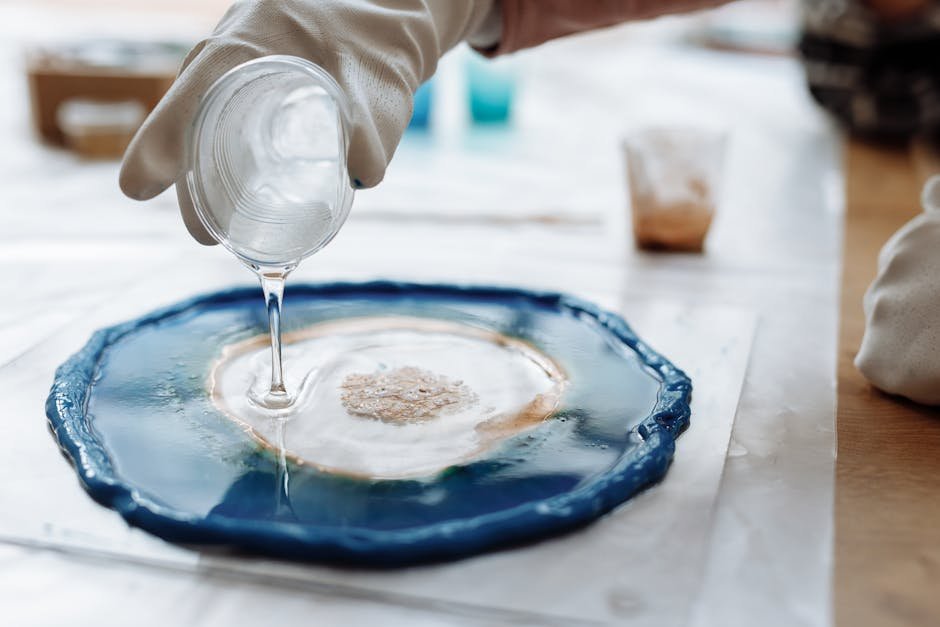
Mixing for laminating? A little for a lot. So, 20cc resin and 10cc hardener. That’s 30cc total. Mix that epoxy good. Spread it smooth. Fresh epoxy just soaks into the glass. Simple. Get rid of any bubbles. Cloth needs to be tight. No resin puddles allowed on the fiberglass.
Make It Smooth: Sanding Time
Laminate cured? Awesome. Now, blend that puppy in. Grab that 8-inch hard pad, still with 60-grit paper. Hit the high edges. Any raised spots. You’re making it super flat. Super smooth. This step? It’s huge. Makes the hot coat way easier to sand later.
But don’t forget: Sand the actual edge of the fin box. Gotta open it up right. Then, peel off the tape. Carefully. Any loose bits around the edge are bad news for the next step. Clean em up. Because if that tape lifts during the hot coat? Resin. In the box. Not good.
Thin Hot Coat for the Win
The hot coat. Adds protection. Makes it slick. Mix a small batch. Like, 10cc resin to 5cc hardener. Still 2:1. Super thin. Just enough to seal it all up.
Spread it even. Light brush. That resin just flows out. Super clean. Not a mark.
Finishing Touches: Wet Sanding
So close! Alright, final sanding. Start with an 8-inch medium-flex pad. 150-grit paper. Take off that initial shine. Then, swap to 220-grit. Blend those edges back into the board. All that earlier work? Pays off big time here. Should blend right in.
Next up, 400-grit wet/dry paper. Dry sand it first. Hit all the edges. Make sure it blends. Really blends. Pull off that tape slowly. Should come right off, leaving clean lines. For that extra little punch? A bonus 400-grit wet sand. Makes the repair sing.
Stick that fin back in. Perfect fit. Your board? Solid. Fixed. Ready to shred. Good as new.
Quick Questions
What’s the best resin-to-hardener mix for this fix?
It’s 2:1 for epoxy. That’s key for a strong bond.
How many fiberglass patches should I use?
Usually two. A smaller one first. Then a bigger one layered over it. Builds good strength.
What’s the last thing I do to make it look pro?
After the hot coat, wet sand it. Start with 150, then 220, then 400-grit. Makes it smooth and look right.


