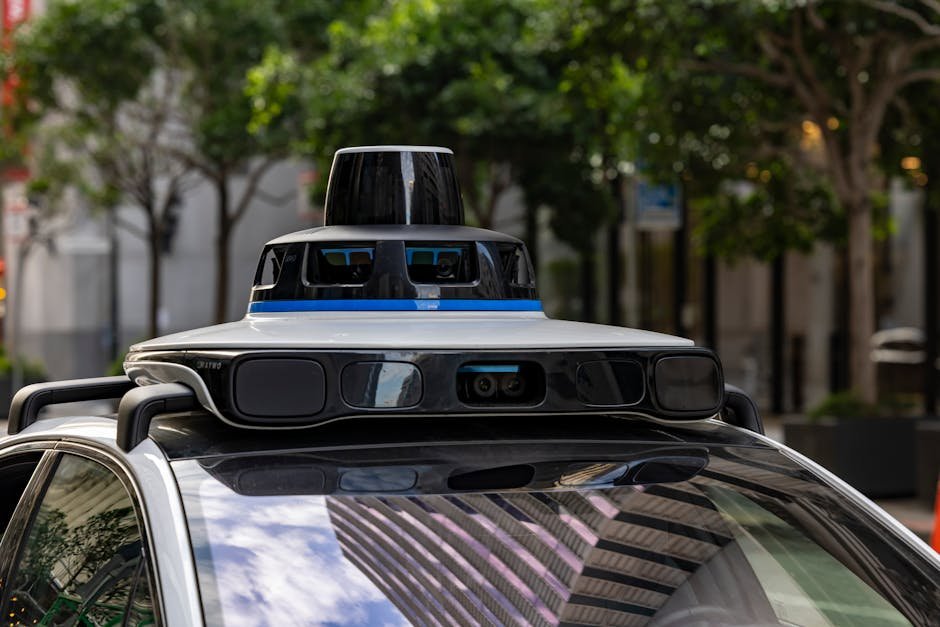
California’s Robot Cars: Ethics, Dilemmas, and Your Next Drive
Ever wonder if that fancy driverless car to the beach might be set up to sacrifice you in a crash? It’s not just some wild sci-fi idea anymore. Autonomous Vehicles California Travel is totally happening on our freeways and city streets. Right now. But what when these car brains have an impossible choice? This isn’t just about speed limits. It’s about sticking human morality into machines, and honestly, it’s a super messy problem.
The Big Moral Mess (Yep, Like the Trolley Problem) in Self-Driving Cars
Picture this: A runaway trolley. Five poor workers are stuck ahead. You’re by a lever. Pull it? The trolley switches tracks, saving the five. But it hits just one person on the other track. What do you do?
This classic “Trolley Problem,” first thought up by a smart guy named Philippa Foot, might sound like a weird mind game. But swap that trolley for an autonomous vehicle, and boom! You’ve got actual code to write.
These aren’t just deep thoughts for college philosophy classes. Imagine a self-driving car in California’s crazy traffic. Two passengers are inside. An elderly couple, say. An accident is definitely happening. The car can either hit a young man and woman crossing the road, keeping its passengers safe. Or, it can swerve. Killing its passengers. Pedestrians live. Which choice does the code make?
Other experiments get even trickier. Does the car pick a heavy guy over someone athletic? A group of five different people (like a doctor and someone homeless) instead of another group? Or what if it’s a pregnant woman and a dog versus an old couple in the car? These are the actual brain scramblers for programmers. Deciding who lives. And who dies. All before the car ever hits the road.
Diverse Human Choices Affect Robot Car Design
Think everyone on Earth judges right and wrong the same way? Not even close. Researchers at MIT’s Moral Machine project asked over two million people, from 200 countries, about tons of these crash situations. The results were wild.
Some groups in the East, for example, really wanted to save old folks and adults over kids. Down South, people from places like Venezuela and Colombia, where there’s a huge money gap, often picked athletic folks or “businessmen” to save. Even if it meant the car slammed into a wall. It turns out our personal moral compass can swing in totally different directions, depending on where you grew up. And your local vibe.
But, even with all those differences, a few things showed up everywhere. People generally liked saving women more than men. Humans over animals. (Sorry, Fido.) And, most of all, causing fewer deaths instead of many. So, a worldwide algorithm probably won’t make everyone happy. But some basic guidelines? They just might stick.
Asimov’s Laws? Not Enough for California’s Messy Roads
Remember sci-fi author Isaac Asimov? Back in the day, he tried to make AI ethics simple with his Three Laws of Robotics. First rule? “A robot may not injure a human being or, through inaction, allow a human being to come to harm.” Sounds perfect, right?
Not so fast. Asimov’s rules, cool for their time, fall apart when you throw the Trolley Problem at them. If a robot can’t harm anyone. But doing nothing harms five. What’s a bot to do? The laws just trip over each other.
And another thing: Navigating California’s diverse roads—like the twisty Pacific Coast Highway, or the clogged-up L.A. freeways, or even snowy Tahoe spots in winter—means unpredictable stuff. Simple rules can’t deal. We’re talking about putting in virtues like feeling bad, or deciding to take one for the team. How do you even code “pity”? Artificial intelligence needs more than just a “don’t hurt anyone” sticker. It needs a moral frame. One that’s like ours. And that’s super tricky.
The Tough Job of Coding Human Virtues for Robot Decisions
This isn’t just about numbers. It’s about how humans really feel. All the weird choices we talk about in made-up problems? They’re often miles away from the intense, stomach-churning reality of life and death. You click an answer on a survey. But what about when it’s your mom on the line?
Think about that story: the railroad worker, a dad, who takes his little kid to work at a bridge. Dad lifts the bridge for boats. Puts it down for trains. One day, a train shows up early, packed with people. But his son, playing nearby, falls. Gets stuck in the gears that lower the bridge.
The dad has mere seconds. Should he save his son? Then the train crashes. Hundreds die. Or does he lower the bridge? Sacrificing his own child to save everyone else. This isn’t some polite multiple-choice test. It’s a dark, soul-crushing moment. And no algorithm, no matter how clever, can truly get that without feeling deep emotions.
From Classroom Talk to Real Cars on Real California Roads
The Moral Machine tests are awesome. Great for discussions. Good for collecting info on what people prefer. But they’re still just mind games. When the tires hit the pavement—literally!—real-life situations rarely get as clean as ‘five people versus one person’.
Justice. Conscience. Compassion. These are qualities that are just impossible to easily code. They get tested when the stakes are sky-high. Not in a survey with checkboxes. And because Autonomous Vehicles California Travel is getting more common, the choices baked into their software will touch real lives on our roads. From people stuck on the 101 to families heading to Disneyland.
We’re past asking “if” these cars are coming. They’re here. Getting smarter daily. So now, the talk needs to be about how we make sure these machines — these robot drivers — make choices that actually fit our own sometimes-crazy human values. This isn’t just a tech thing. It’s a society thing. And it needs everyone paying attention before those cars zoom off into the sunset. On autopilot.
## Common Questions
Q: Are Asimov’s Laws of Robotics still relevant for today’s robot cars?
A: Not really. They sound cool, sure, but they don’t work for complicated situations where doing nothing still hurts someone. Like saving one person versus five.
Q: What was MIT’s “Moral Machine” thing? What did it show?
A: It was this huge online poll from MIT. It showed people computer crashes with self-driving cars and asked them who to save. What came out? Folks worldwide didn’t always agree. Things like age, how much money someone had, and even if it was a human or an animal changed people’s choices. But most everybody wanted to save more lives over fewer, that was consistent.
Q: Can robot cars actually feel things like sacrifice or pity?
A: Nope. Not like a human. Sacrifice and pity are seriously deep emotions. Programmers try to put rules in place that go along with how humans typically prefer things, based on those studies. But getting a computer to really feel those things? That’s still a super big problem.


